Depth Parallax — move the camera through a flat image
The newest depth effect estimates the distance in your picture and lets the camera drift through it — no 3D scene, no rig.
A photograph has already recorded the distances in a scene. The lens saw what was near and what was far — that information is sitting in the picture, in the way things overlap, blur, shrink and shade. It just gets thrown away the moment the file lands as a flat grid of pixels.
Depth Parallax puts it back.
What it does
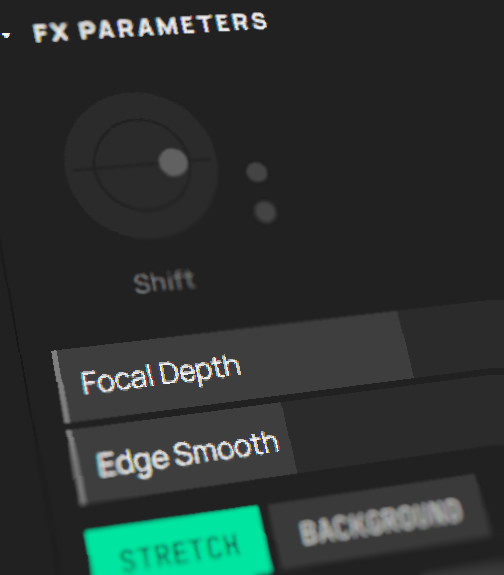
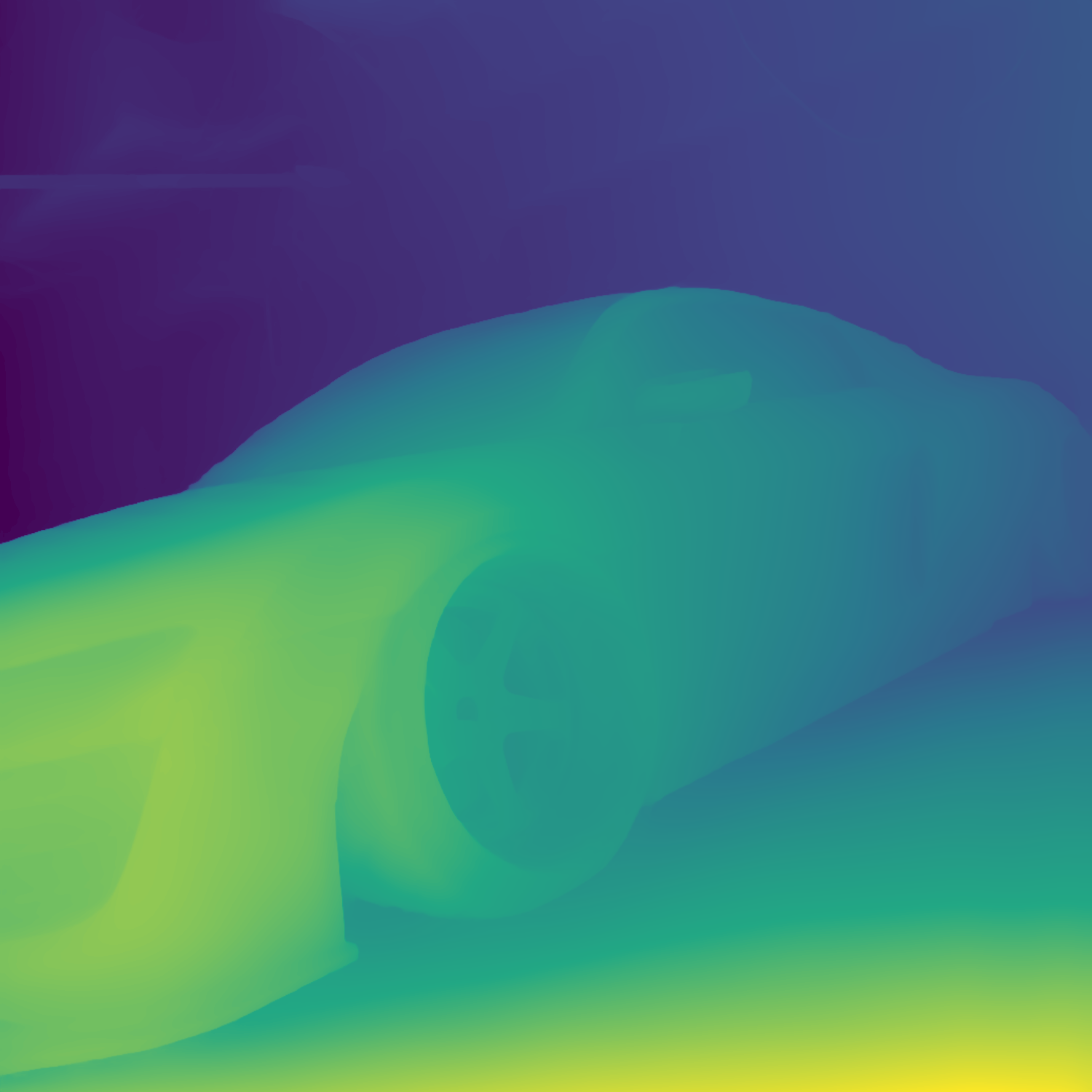
Drop in a single image. V3KTR infers a depth map for it in the browser — no scanner, no second lens, no depth pass rendered out of a 3D package. Depth Parallax then reads that map and displaces every pixel by its own distance relative to a focal plane you choose. Move the camera and the picture responds the way your eye expects: the foreground travels a long way, the mid-ground less, the horizon barely at all.
That's the whole trick, and it's the thing that makes it read as real rather than as a warp. Parallax isn't a distortion applied to a picture; it's what happens when things at different distances are seen from a new position.
The hard part: what's behind things
The moment you shift a viewpoint you ask for information the original photo never had. Move left, and you're now looking at wall that the subject's shoulder was covering. There is nothing there. This is disocclusion, and it's where most fake-3D effects fall apart — you get rubber-sheet stretching around every edge.
V3KTR gives you two ways to fill those holes. Smear drags the neighbouring material into the gap, which is fast and disappears entirely on textured or busy backgrounds. Pull reaches past the edge and borrows a farther neighbour — slower, but it respects the fact that a hole revealed behind a near object should be filled with far material, not with a stretched copy of the near one.
Which one wins depends on the picture. Keep the camera movement modest and neither will ever announce itself.
Pair it with Motion
On its own, Depth Parallax is a control you push. The interesting version is what happens when you hand it to FX Motion: arm the parallax with a Move — Orbit, Sway, Bob or Drift — and the still becomes a living photo that loops seamlessly, because every path is periodic and returns exactly where it started. No keyframes, no timeline: FX Motion drives the effect's own parameters, and it exports frame-accurate.
Try it on something of yours
It runs live, in a browser tab, on your own image. The best test is a photo with real depth separation in it — a subject with a background well behind them, a street that recedes, anything where your eye already knows what's near and what's far.